Your Vacation Dollars Are Either Saving Coral Reefs or Killing Them — Here's How to Choose Wisely
Your Vacation Dollars Are Either Saving Coral Reefs or Killing Them — Here's How to Choose Wisely
Let's be honest about something most travel ads won't say out loud: that sprawling all-inclusive resort perched on the edge of a turquoise bay didn't appear out of nowhere. It displaced something — fishing families, mangrove forests, traditional land stewardship — and it keeps displacing those things every single day it operates. Meanwhile, somewhere down the same coastline, a local family is running a four-room homestay, serving guests fresh fish caught by their neighbor, and funneling a portion of every booking into coral fragment nurseries they tend by hand.
The choice between those two options isn't just about aesthetics or budget. It's a vote cast in real time for what kind of coastline exists ten years from now.
The Reef Economy Nobody Talks About
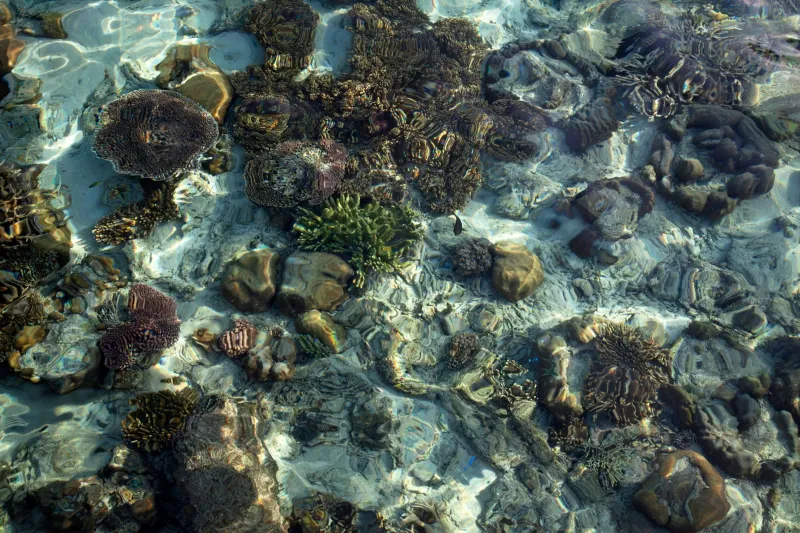
Coral reefs cover less than one percent of the ocean floor, yet they support roughly a quarter of all marine species on the planet. They protect coastlines from storm surge. They anchor fisheries that feed millions. And in reef-adjacent communities — places like the coastal villages of the Philippines, the cays of Belize, the atolls of French Polynesia — they are the entire economy.
Here's the uncomfortable math: mass tourism, the kind engineered around large resort complexes, frequently accelerates the very reef degradation it markets as an attraction. Sewage runoff, construction sediment, boat anchor damage, and the sheer volume of sunscreen-slathered tourists overwhelming fragile ecosystems all compound the existing threats of warming seas and ocean acidification. Resorts profit from the reef's beauty while externalizing the environmental cost onto the local ecosystem and the communities that depend on it.
Homestays near reef systems operate on a fundamentally different logic. When a family's livelihood is tied directly to the health of the reef — not through a corporate intermediary, but through the fish their guests eat, the snorkel sites they guide visitors to, the view from the porch that keeps people coming back — they have every reason to invest in that reef's survival.
Meet the Hosts Who Are Doing the Work
In the Coral Triangle region, which stretches across parts of Indonesia, Malaysia, the Philippines, Papua New Guinea, the Solomon Islands, and Timor-Leste, small homestay operators have become unlikely conservation heroes. Families who once relied entirely on fishing have pivoted toward hosting travelers, and many of them have used that income stream to fund the kind of grassroots reef work that large NGOs often can't reach.
Take the model practiced by homestay hosts in places like Tulamben, Bali, or the islands around Raja Ampat. Hosts in these communities have used guest revenue to purchase mooring buoys — simple, inexpensive devices that prevent dive boats from dropping anchors directly onto coral heads. A single anchor drop can destroy decades of coral growth in seconds. A mooring buoy, costing a few hundred dollars, protects that growth indefinitely. One well-booked homestay season can fund several of them.
Further east, in communities along the Mesoamerican Barrier Reef — the second-largest coral reef system in the world, running along the coasts of Mexico, Belize, Guatemala, and Honduras — homestay hosts have partnered with local marine biologists to run coral fragment nurseries. Broken coral pieces that would otherwise die are collected, attached to underwater frames called coral trees (yes, the imagery is intentional), and allowed to grow until they're large enough to be transplanted back onto damaged reef sections. Guests at participating homestays often get to join these restoration dives, turning a snorkeling trip into something that actually gives back.
The Plastic Problem and the People Solving It
One of the most persistent threats to reef ecosystems isn't warming water or pollution from distant factories — it's the plastic waste generated by tourism itself. Single-use plastics carried onto beaches, dropped by boat passengers, or swept from poorly managed resort waste systems end up on reefs, in the guts of reef fish, and broken down into microplastics that infiltrate the entire marine food web.
Homestay hosts in coastal communities are often at the forefront of local plastic reduction efforts, partly out of necessity and partly out of genuine investment in their environment. Many operate with a near-zero single-use plastic policy, providing guests with filtered water stations, reusable bags, and reef-safe sunscreen (a small detail that matters enormously — chemical sunscreens containing oxybenzone and octinoxate have been shown to bleach coral even at very low concentrations).
Some hosts go further, organizing weekly beach cleanups that guests are invited to join, partnering with local schools to run ocean literacy programs, or connecting with regional plastic-for-cash exchange programs that give fishing families a financial incentive to bring collected plastic to shore rather than letting it sink.
Why the All-Inclusive Model Deserves a Hard Look
American travelers are conditioned to see the all-inclusive resort as a value proposition — pay one price, get everything, never worry about tipping or overspending. It feels efficient. It feels safe. But the economic structure of the all-inclusive model is specifically designed to keep money circulating within the resort's own ecosystem, not the local one.
Food, drinks, entertainment, excursions — all of it is captured internally. Local restaurants don't benefit. Local guides often don't either, unless they've been contracted through the resort at rates that favor the resort. The fishing family down the road, the woman making handwoven bags at the market, the homestay host who knows every coral head within a mile of shore — they see very little of what you spend.
Contrast that with a homestay booking. Your room payment goes directly to the family who owns the home. Your meals, often included or purchased locally, support the same community. Your guided snorkel trip funds a local guide who grew up on that reef. The economic ripple effect is immediate and traceable. You can see exactly where your money goes because you're living inside the community it supports.
How to Find Homestays That Actually Walk the Walk
Not every homestay near a reef is doing active conservation work, and that's okay — simply keeping tourism dollars local is already a meaningful act. But if you want to find hosts who are genuinely invested in reef restoration and sustainable practices, here's what to look for:
Ask direct questions before booking. A host who is actively involved in conservation will want to talk about it. Ask whether they participate in any reef monitoring programs, whether they have a plastic reduction policy, or whether guests can join any restoration activities during their stay.
Look for reef-safe certifications or affiliations. Some regions have local marine protected area partnerships or eco-certification programs for small accommodations. These aren't perfect signals, but they indicate a host who has engaged with the conversation.
Read reviews with an ecological eye. Guests who care about sustainability will mention it. Look for reviews that reference snorkeling conditions, local food sourcing, or host involvement in the community.
Book through platforms that vet for sustainability. Sites like The Coral Tree Homestay are built around the premise that accommodation choices have consequences — and that travelers deserve to know what those consequences are before they hand over their credit card.
The Simplest Form of Reef Conservation You'll Ever Do
You don't have to be a marine biologist. You don't have to donate to a conservation fund or offset your flight emissions or give up beach vacations entirely. You just have to make a slightly different booking decision — one that puts you in the home of someone who knows that reef like a family member, who has watched it bleach and partially recover and bleach again, and who is doing something about it with whatever tools they have.
That's the quiet power of the homestay model. It turns travelers into stakeholders. It makes your presence on a reef something that contributes to its future rather than drawing it down. And it gives you a travel experience that no resort brochure can replicate: the genuine, unhurried knowledge that where you slept last night actually mattered.