They Stayed in Someone's Home Abroad — Then Came Back and Opened Their Own
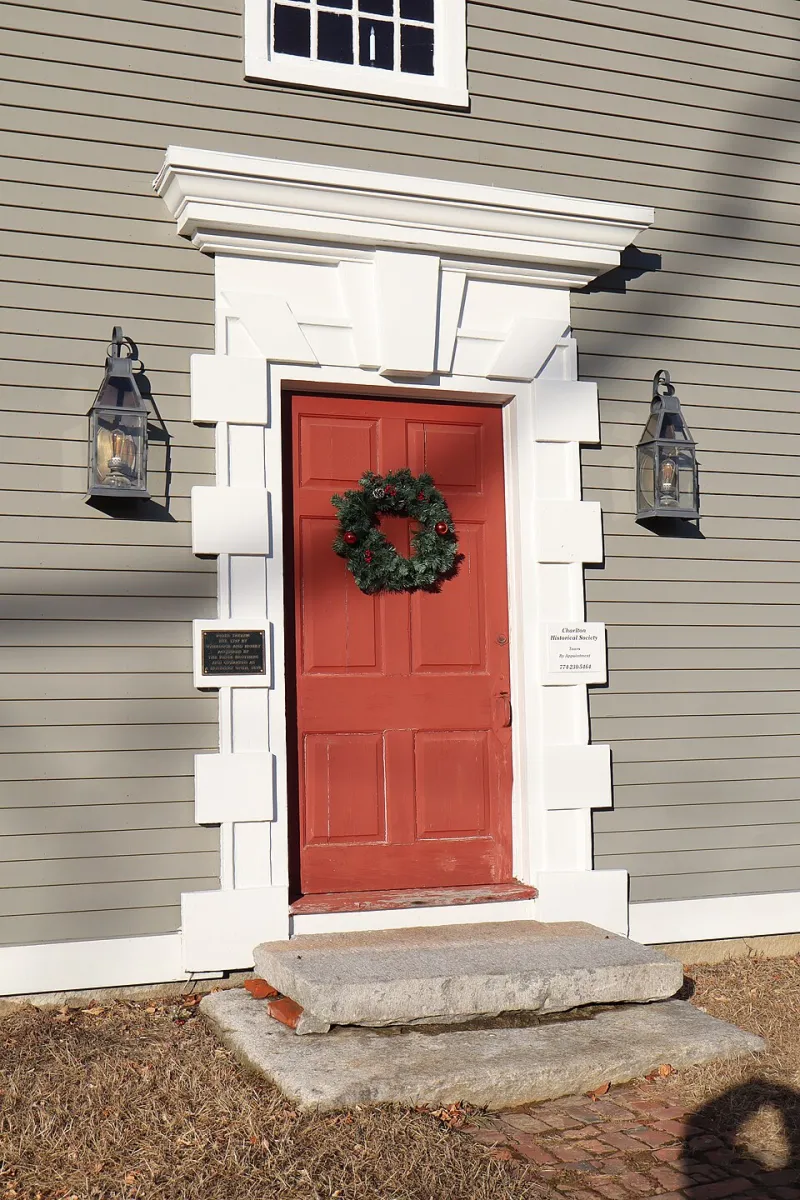
Photo: Peter Cooper Jr., CC0, via Wikimedia Commons
For most of her adult life, Diane kept her front door firmly closed to strangers. Not unfriendly — just private. Her home in Asheville, North Carolina was her sanctuary, carefully arranged, personal in the way that only spaces lived in for years can be. The idea of inviting someone she didn't know to sleep down the hall would have struck her, before, as somewhere between uncomfortable and genuinely bizarre.
Then she spent three weeks in a family homestay in Portugal.
"Everything I thought I knew about hospitality got rearranged," she says. "These people had almost nothing by American standards, and they gave me everything. I came home and I couldn't stop thinking about what I had — this big house, spare rooms, a neighborhood worth knowing — and how I was just... hoarding it."
Within a year, Diane had listed her spare bedroom as a homestay. She's been hosting for four years now.
The Reciprocity That Changes People
Diane isn't unusual. Across the US, a quiet movement is taking shape among travelers who've experienced the particular intimacy of homestay travel abroad and returned home with a changed relationship to both hospitality and their own front doors. They're becoming hosts — not primarily for the income, though that helps, but because something in the exchange shifted something in them.
It's a form of reciprocity that the travel industry rarely talks about, because it doesn't fit neatly into any product category. You can't book it on an app. It emerges, instead, from the kind of travel that actually gets under your skin.
Research on what sociologists call "reciprocal altruism" suggests that when people experience genuine generosity — the kind that comes without a transaction attached — they're strongly motivated to pass it on. Homestay travel, at its best, triggers exactly this. A host who shares their table, their neighborhood knowledge, their family stories, and their time creates an experience that commercial hospitality simply can't replicate. And for many travelers, that experience plants a seed.
What American Attitudes Toward Home Actually Mean
There's a reason this shift is notable in a specifically American context. In the US, the home carries a particular cultural weight. It's a marker of achievement, a symbol of privacy, a space where the performance of public life is finally allowed to drop. The phrase "a man's home is his castle" is old, but the underlying psychology isn't.
Americans tend to be more guarded about their domestic spaces than people in many other cultures — more likely to entertain in restaurants than at home, more likely to maintain clear boundaries between public and private selves. Inviting a stranger to share that space, even temporarily, asks something real of people.
Which is part of why those who do it often describe the experience as unexpectedly transformative — not just for their guests, but for themselves.
Trevor, a retired high school teacher from Flagstaff, Arizona, started hosting after a homestay experience in Japan reshaped his understanding of what a home could be. "In Japan, the family I stayed with treated their home as something that existed partly for other people — for guests, for community. That's just not how I'd ever thought about a house before. I grew up being told you work hard, you buy a home, you protect it. The idea that it could be porous, that it could be generous — that was new to me."
He now hosts solo travelers and couples in a renovated guest casita on his property. He describes the guests who've passed through as "the best thing that ever happened to my understanding of the world."
The Practical Reality (Which Is Also Kind of the Point)
Becoming a homestay host after experiencing one isn't just an idealistic exercise. It comes with real logistical weight, and the people who do it tend to be clear-eyed about that.
There's the question of house rules — how to communicate your boundaries without sounding unwelcoming. There's the management of shared spaces, the coordination of schedules, the occasional guest who misreads the vibe and treats a homestay like a hotel. There's the emotional labor of being "on" for strangers when you're tired, or when your own life is complicated.
And then there's the deeper question of what you're actually offering. A homestay isn't just a room with a bed. It's an implicit promise of access — to you, your neighborhood, your daily rhythms. That's a generous thing to offer, and it asks something of hosts that a traditional rental arrangement doesn't.
Maria, who hosts out of her home in Santa Fe after years of homestay travel through Central America, is direct about this: "There are weeks when I'm exhausted and I wish I had a hotel-brain about it — just clean the room, hand over the key, done. But then a guest and I end up talking for three hours about something real, and I remember why I'm doing this. It's not passive income. It's active hospitality. There's a difference."
What Gets Exchanged When You Open the Door
The travelers-turned-hosts interviewed for this piece all describe a version of the same surprise: that opening their homes changed their relationship to their own communities.
When you start seeing your neighborhood through the eyes of a curious stranger, you notice things you'd stopped seeing. The bakery you walk past every morning. The way the light hits the mountains at 6 p.m. The particular character of your block, your city, your region — things that familiarity had made invisible.
"My guests have taught me more about Asheville than I learned in fifteen years of living here," Diane says. "They ask questions I stopped asking. They get excited about things I take for granted. It's like having your hometown given back to you."
This is the feedback loop that sustainable tourism advocates have been trying to articulate for years: when travelers engage with places as guests rather than consumers, and when residents engage with travelers as hosts rather than service providers, something different happens. Money stays local. Relationships form. Understanding travels in both directions.
The reverse host exchange isn't a program or a platform. It's a philosophy — one that starts with a single decision to unlock the door.
The Invitation You Can Extend
Not everyone who has a transformative homestay experience abroad will become a host. The logistics are real, the emotional investment is substantial, and not every home or lifestyle makes it practical.
But for those who've felt that particular pull — the one that says I want to give someone what was given to me — the path is clearer than it might seem. The infrastructure for conscious, community-rooted hosting exists. The travelers who want this kind of experience are looking for it.
And sometimes the most meaningful journey you take isn't the one that carries you somewhere new. It's the one that brings someone else to your door.