The Thermostat Wars: How the Way You Heat and Cool a Homestay Is Quietly Wrecking the Planet
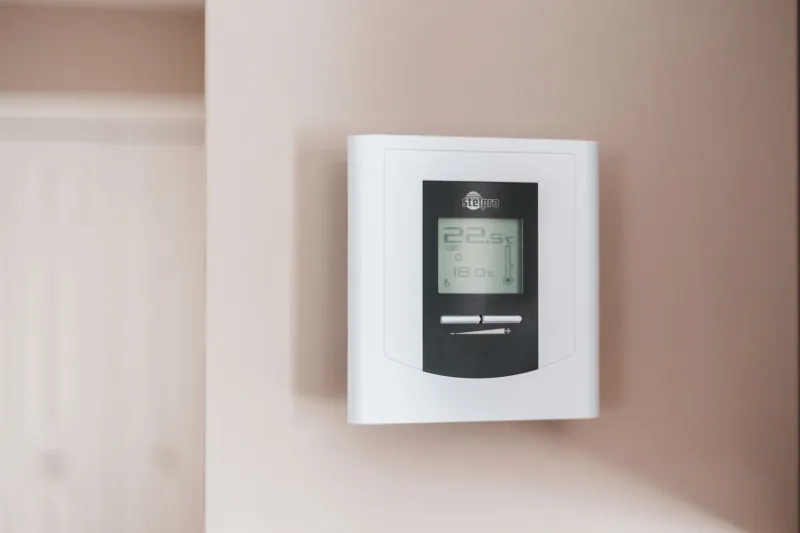
Let's start with a number that might surprise you: in the average US home, heating and cooling accounts for roughly 43 percent of total energy consumption. Not the refrigerator. Not the washer and dryer. Temperature control. Nearly half.
Now consider that when you stay in someone's homestay, you're often operating in a space that was designed around one household's habits — and you're bringing yours. You like it colder at night. They keep the heat lower during the day. You want the AC on by 10 a.m. They open windows and use ceiling fans. These aren't just lifestyle differences. They have measurable environmental consequences.
For conscious travelers who've already made the effort to book a values-aligned homestay rather than a big-box hotel, this is the part of the footprint that often goes unexamined. It's not glamorous. It doesn't come with a reusable tote bag or a carbon offset checkbox. But it matters.
Where the Energy Actually Goes
The US Energy Information Administration tracks residential energy use in granular detail, and the picture it paints is clarifying. Space heating alone — warming the rooms of a home — represents about 27 percent of total residential energy use nationally. Air conditioning adds another 13 to 15 percent depending on the region and season. Together, they dwarf nearly every other category of home energy consumption.
In a well-insulated, efficiently managed home, those numbers can be significantly lower. Many homestay hosts who identify as eco-conscious have invested in upgrades — better insulation, smart thermostats, heat pumps instead of gas furnaces — specifically to reduce this footprint. But those investments only work as designed when the occupants use the systems as intended.
A guest who cranks the AC to 65 degrees in a Florida homestay during August isn't just running up the electric bill. They're potentially overwhelming a system calibrated for moderate use, triggering inefficiencies, and generating carbon emissions that the host's sustainability choices were designed to avoid.
The Guest Comfort Gap
Hosts notice this. Many just don't say anything.
"I have a mini-split system that's really efficient when it's used correctly," explains Renata, who hosts in her Asheville, North Carolina home and has been vocal in sustainable hosting communities about energy use. "But some guests treat it like it's a race to get the room as cold as possible. They'll set it to 60 and then pile on blankets. I've thought about putting a note in the welcome guide but I worry it sounds controlling."
That hesitation — to seem controlling, to make guests uncomfortable about comfort — is nearly universal among hosts we spoke with. Hospitality culture in the US runs deep, and there's a powerful social norm around not making guests feel like they're doing something wrong when they're just trying to sleep comfortably.
But the environmental math doesn't care about social norms. And the gap between what hosts want guests to do and what guests actually do with climate control is, according to multiple hosts, one of the most consistent sources of both higher utility bills and higher carbon output during guest stays.
What the Data Suggests About Optimal Settings
The Department of Energy recommends 78°F when you're home and cooling, 68°F when you're home and heating — with adjustments of 7 to 10 degrees when you're asleep or away. These aren't arbitrary numbers. They represent the range in which most modern HVAC systems operate most efficiently, and in which energy consumption is meaningfully reduced without significant comfort sacrifice for most people.
Research on thermal comfort — including studies from Lawrence Berkeley National Laboratory — consistently shows that humans adapt to ambient temperatures more effectively than they expect, particularly when they have control over other variables like airflow, humidity, and bedding. In other words: a guest who's given a good fan and a lightweight duvet can often sleep comfortably at 72°F even if they usually keep their home at 68°F.
The discomfort of a slightly warmer room is real but manageable. The carbon cost of overcooling is also real — and, in aggregate, significant.
Practical Moves That Actually Help
None of this is meant to make you feel guilty for wanting to sleep comfortably. That's not the point. The point is that small, intentional adjustments in how you interact with a homestay's climate systems can meaningfully reduce your environmental footprint without making your stay miserable. Here's what that actually looks like in practice.
Ask about the system before you touch it. This sounds basic but it's genuinely useful. Many hosts have set their thermostats intentionally — sometimes with timers or smart scheduling built in. Asking "How do you usually run the AC?" gives you useful information and signals to your host that you're paying attention.
Use the ceiling fan. Ceiling fans allow you to raise the thermostat setting by about 4°F with no reduction in comfort, according to Energy Star data. They use a fraction of the energy of a central air system. In most homestays, they're underused by guests who default straight to the thermostat.
Adjust at night, not all day. If you're someone who sleeps better cold, consider running the AC more aggressively for the hour before bed and then setting it to a moderate temperature overnight rather than keeping it at full blast all day while you're out exploring.
Close the doors. In a homestay, you're often cooling or heating a room that's part of a larger house. Keeping your bedroom door closed when the AC or heat is running keeps the conditioned air where you actually are and reduces the load on the system overall.
Mention it if you're struggling. Hosts would often rather know that a guest is uncomfortable than have them silently overcorrect with the thermostat. Many have additional options — extra fans, heavier blankets, room placement adjustments — that they'd be happy to offer if asked.
The Bigger Picture
This isn't really about thermostats. It's about what it means to be a guest in someone's home rather than a customer in a hotel room. Hotels build wasteful climate control into their business model — the energy costs are distributed, the sustainability consequences are largely invisible, and no individual guest feels responsible.
In a homestay, the relationship is different. Your choices are visible. They affect a real person's utility bill, their carbon footprint, and sometimes their ability to continue hosting sustainably. That's not a burden — it's an invitation to be more intentional.
Conscious travel has always been about recognizing that your presence in a place has consequences. Temperature control is just one of the less glamorous places where that principle applies. But it applies.