What Hosts Wish They Could Tell You Before You Walk Through the Door
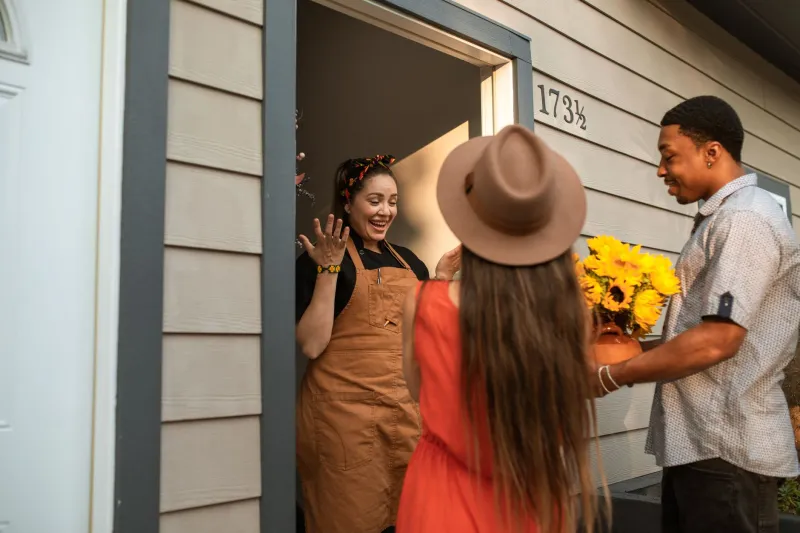
There's a moment every homestay host knows well. It usually happens around day two, sometimes day one. A guest does something — not wrong, exactly, not rude in any obvious way — but something that makes the host pause in the kitchen, take a quiet breath, and remind themselves why they started doing this in the first place.
It's rarely about broken house rules. The rules are in the welcome booklet. This is something else. Something harder to name.
We reached out to more than a dozen experienced homestay hosts across different regions — from a multigenerational family running a coastal property in coastal Maine to a couple who've been welcoming travelers into their New Mexico adobe for nearly eight years — and asked them a simple question: What do you wish your guests knew before they arrived?
The answers were surprisingly consistent. And almost none of them were about checkout times.
You're Not Checking Into a Hotel. That's the Point.
Maria, who hosts out of her Victorian-era home in Savannah, Georgia, puts it plainly: "The guests who have the hardest time are the ones who want the hotel experience but at a lower price. They want room service energy in a family home. And I get it — that's what they're used to. But it's just not what this is."
The distinction matters more than most travelers realize. When you book a homestay, you're entering someone's actual life. The coffee maker has quirks. The dog might sit outside your door in the morning. Dinner might smell like whatever the host's grandmother used to cook on Sundays. These aren't inconveniences to be tolerated — they're the entire point.
Conscious travelers tend to understand this instinctively. But even well-intentioned guests can slip into consumer mode without realizing it, treating the host as a service provider rather than a person sharing their home.
The Rhythm of the House Is Real
Every household has a rhythm — a kind of invisible schedule that governs when things happen and how the space flows. Hosts are almost universally reluctant to spell this out explicitly because it feels controlling. But ignoring it creates friction that slowly erodes the experience for everyone.
Derek and Yolanda, who host travelers in their Portland, Oregon bungalow, describe it this way: "We're morning people. By 6 a.m. we're in the kitchen. That's just our life. We don't expect guests to be up with us, but if someone sleeps until noon and then acts surprised that we've already cleaned up breakfast and moved on with our day — that mismatch creates awkwardness."
The fix isn't complicated. It's just a conversation that most guests don't think to have. Ask your host, early on, what their day looks like. When do they tend to cook? Is the living room a shared space in the evenings or do they prefer quiet after 9? These aren't intrusive questions — they're the kind of thing you'd naturally figure out living with a roommate, and homestay hosting is, in many ways, exactly that.
Shared Spaces Have Invisible Rules
This is where things get nuanced. The kitchen, the porch, the backyard — these spaces might be listed as "shared" in your booking, but shared doesn't mean identical access for everyone.
Rosario, who hosts out of her family home in Santa Fe, explains: "In my culture, the kitchen is sacred. I love when guests want to cook — I encourage it — but I do wish they'd ask first rather than just assuming. It's not about the food or the mess. It's about the gesture. Asking says 'I see this is your space and I'm grateful to be in it.'"
That gesture — of acknowledgment, of deference — comes up again and again in conversations with hosts. It doesn't require elaborate performance. A simple "Would it be okay if I made myself some tea around 8?" carries more weight than most guests imagine.
Your Presence Affects the Whole Household
Here's something hosts rarely say out loud: having a stranger in your home is tiring, even when you love it. The social energy required to host — to be present, warm, and attentive — doesn't switch off at the end of the workday. Hosts are often performing a kind of emotional labor that's invisible to guests.
Jamila, who has been hosting solo travelers through her Chicago brownstone for five years, describes the cumulative effect: "By the end of a two-week booking, I'm genuinely worn out. Not because the guest did anything wrong. Just because I'm always a little 'on.' The guests I love most are the ones who give me space to just be a person. They don't need me to be their tour guide every single day."
The takeaway for travelers isn't to be distant or aloof — hosts genuinely want connection. It's more about reading the room. If your host seems tired, let them be tired. If they're not at the door when you come home, that's probably fine. You don't need to check in every time you leave or return.
The Compliment That Actually Means Something
Ask any experienced host what guest behavior they appreciate most, and almost none of them mention five-star reviews (though those help). What they remember is specificity.
"When a guest says 'Thank you, that was great' on the way out, it's nice," says Maria from Savannah. "But when they say 'I loved waking up to the smell of your coffee every morning' or 'Your neighborhood is so alive — I sat on the porch for an hour just watching people walk by' — that tells me they were actually here. They weren't just sleeping in my house. They were experiencing it."
That's the thing about homestay travel at its best. It's not a transaction. It's a brief, reciprocal relationship — one where the host opens their life and the guest, ideally, shows up for it.
The unspoken language of hospitality isn't that hard to learn. It mostly comes down to being present, being curious, and treating the people who welcome you as exactly what they are: real people, living real lives, generous enough to share them with you.
That's worth showing up for.