Peak Season, Lower Bill: The Real Math Behind Booking a Homestay When Everyone Else Is Paying Resort Prices
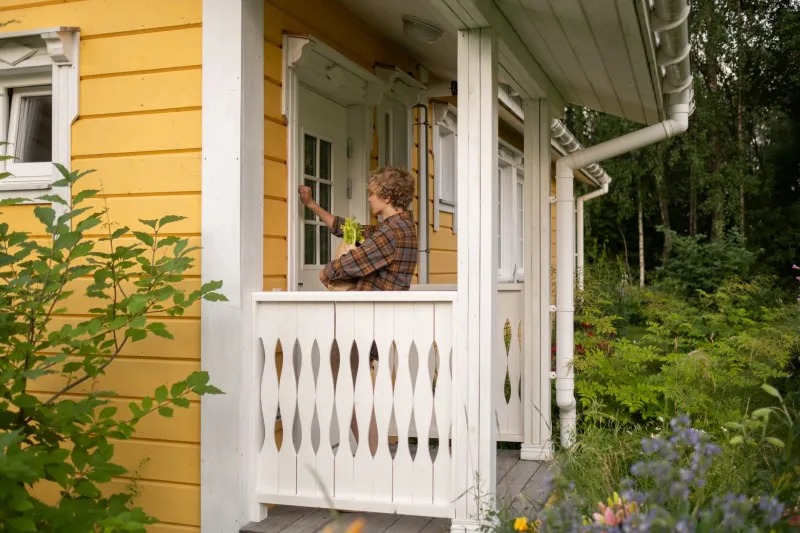
It's the third week of July. You've been refreshing hotel booking sites for twenty minutes, watching the prices tick upward in real time like a stress-inducing stock ticker. A mid-range chain hotel near the beach? $340 a night, breakfast not included, parking extra, resort fee tacked on at checkout like a bad joke. You close the laptop. You open it again. Nothing has changed.
Here's what most travelers don't realize in that moment: the accommodation market isn't one market. It's two. And the one where family-run homestays live operates by completely different rules.
Why Resort Pricing During Peak Season Is Basically a Hostage Situation
Large hotel chains and resort groups have spent decades perfecting what the industry calls dynamic pricing — the practice of raising rates in direct proportion to demand. It's legal, it's widespread, and during summer break or the week between Christmas and New Year's, it means you're paying a premium that has almost nothing to do with the quality of your experience and everything to do with the fact that you have limited options.
A 2023 analysis by NerdWallet found that hotel prices during peak summer weeks in popular US destinations like coastal Maine, the Florida Keys, and the Pacific Coast Highway corridor routinely run 60 to 90 percent higher than shoulder-season rates. That's not a small difference. For a family booking five nights, that gap can represent $800 to $1,500 in pure timing penalty.
Homestay hosts, by contrast, are not running algorithmic pricing engines. They're people with a spare room, a garden cottage, or a lovingly converted carriage house — and they tend to price based on what feels fair and sustainable to them, not on what the market will bear at its most desperate.
The Numbers Side by Side
Let's make this concrete. Take a week in late June in a coastal New England town — the kind of place where a decent hotel room runs $280 to $400 per night during peak weeks. A family of four staying five nights is looking at a floor of $1,400 just for the room, before food, activities, or the inevitable ice cream every afternoon.
A comparable homestay in the same town — a private suite with a kitchen, hosted by a local family — might list at $145 to $180 per night on a platform like Hipcamp or directly through a host's own booking page. Same destination. Same dates. Roughly half the nightly cost, and with a kitchen that means you're not eating every meal out.
That kitchen is doing more financial work than it looks like. A 2022 study from the American Hotel & Lodging Association noted that travelers in hotel rooms spend an average of $94 per person per day on food and beverages. A family of four over five days? That's nearly $1,900 in restaurant spending alone. Cut that by half with a homestay kitchen, and you've just recouped another $900.
The total savings across a single peak-season week can easily clear $2,000 when you stack the accommodation delta against the food cost reduction. That's a real number.
How Hosts Think About Peak Season Pricing
We spoke with several homestay hosts across different regions, and what emerged was a philosophy that's almost the opposite of resort pricing logic.
Margarette, who hosts a two-bedroom cottage on her property in coastal Oregon, explained it this way: "I set my rates based on what I need to maintain the place and feel like the exchange is worth it — not based on how desperate travelers are in August. Gouging people feels gross. That's not why I do this."
This sentiment came up repeatedly. Hosts talked about pricing as a relationship, not a transaction. Many deliberately keep peak-season rates modest because they want guests who are actually present — people who'll sit on the porch and talk to them, who'll treat the space with care, who might come back next year.
Some hosts do raise rates modestly during peak weeks, but the increases tend to be incremental rather than exponential. A host who charges $120 a night in April might charge $165 in July — a 37 percent increase that still lands well below what a chain hotel charges for the same geographic market.
The Hidden Costs That Homestays Simply Don't Have
Anyone who's checked out of a resort lately knows the feeling of staring at a final bill that looks nothing like the rate you booked. Resort fees — charged separately and often disclosed only in fine print — averaged $44 per night at US resorts in 2023, according to a report from hotel analyst Bjorn Hanson. Add parking ($25 to $45 a day in urban or beach markets), Wi-Fi fees at older properties, and minibar charges if you have kids who think the fridge is for everyone, and the gap between the listed price and what you actually pay grows fast.
Homestay hosts almost universally charge what they say they charge. Parking is typically included because you're at someone's house. Wi-Fi is included because it's their home internet. There is no minibar, but there's often a note on the kitchen counter that says help yourself to the coffee.
Keeping Money in the Community
The savings argument is compelling on its own, but there's another layer worth naming. When you book a homestay during peak season instead of a chain hotel, the money you spend behaves differently.
Research consistently shows that locally owned accommodations recirculate a higher percentage of guest spending within the local economy than corporate-owned properties. A 2019 study from the Institute for Local Self-Reliance found that locally owned businesses return roughly 48 cents of every dollar to the local economy, compared to about 14 cents for chain businesses.
Your homestay host is buying groceries at the farmers market down the road. They're hiring the neighbor's teenager to help with yard work. They're eating at the diner on Main Street, not sending profits to a corporate headquarters in another state. Your peak-season booking, in a very direct way, is doing more for the community than the same dollars spent at a resort.
How to Find the Deals That Actually Exist
The savings don't materialize automatically — you have to know where to look and how to book.
First, go beyond the big platforms. Airbnb and VRBO have homestay listings, but their fee structures push total costs up considerably. Look for hosts who book directly through their own websites or through smaller platforms like Hipcamp, Fairbnb, or local tourism co-ops. Direct booking often saves 15 to 20 percent in platform fees alone.
Second, book early but ask about flexibility. Many homestay hosts will offer a small discount for bookings made well in advance because it reduces their uncertainty. A quick message asking whether there's a rate for early commitment costs nothing and occasionally saves something.
Third, look for shoulder-peak windows. The week before Fourth of July or the week after Labor Day often carries peak demand without full peak pricing. Hosts tend to be more flexible at the edges of the season.
And finally, ask what's included. A homestay that provides breakfast, kitchen access, and bikes for guest use might list at $160 a night and actually cost less per day than a $200 hotel room where none of those things exist.
The math isn't complicated. The hardest part is just knowing to look.