Meet the Families Turning Their Oceanfront Homes Into Coral Reef Lifelines
There's a version of a beach vacation where you show up, drink something cold, and leave. Nobody judges you for it. But there's another version — one that's quietly gaining ground among travelers who've started asking harder questions — where the room you book is directly wired into the health of the ocean outside your window.
That second version is what these seven homestays are offering. And it's a lot more interesting than a complimentary breakfast.
Each of these properties sits near a coral ecosystem under pressure. Each one is run by a family — not a corporation, not a resort group — who decided that opening their home to travelers was the most practical way to fund the reef work they were already doing. The funding mechanisms are transparent. The impact is measurable. And the stays, by all accounts, are genuinely unforgettable.
1. The Moana Family Guesthouse — Big Island, Hawaii
Kaimana and Leilani Moana have been diving the reefs off Kona since they were teenagers. When bleaching events started hitting harder and more frequently, they converted their two spare bedrooms into a guesthouse. Fifteen percent of every booking goes directly to the Coral Restoration Foundation's Hawaii chapter, and guests are invited — not pressured — to join Kaimana on his weekly reef monitoring dives.
"We don't want people to feel like they're paying a guilt tax," Leilani says. "We want them to feel like partners."
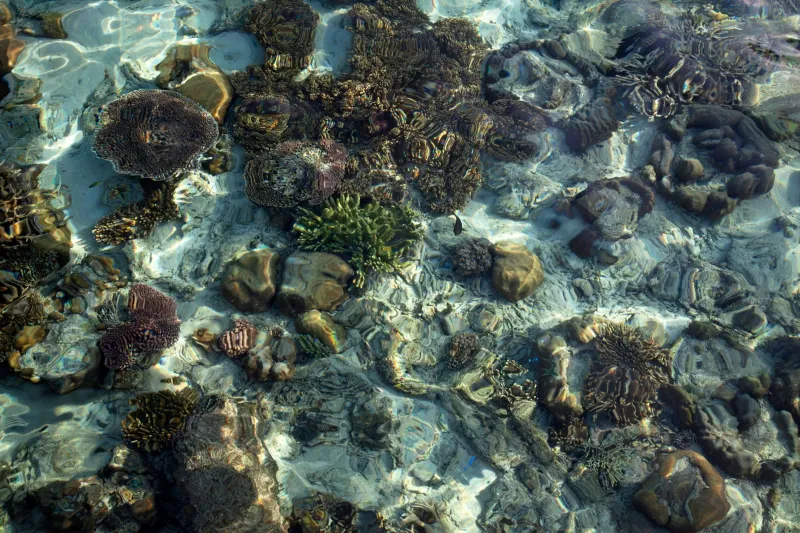
The reef they're working to protect sits just 400 yards offshore. On a clear morning, you can see it from the lanai.
2. Casa Delgado — Key Largo, Florida
Maria Delgado grew up in Key Largo when the reef tract was still dense with staghorn and elkhorn coral. She watched it decline over thirty years. Now she runs a three-room waterfront homestay where 20% of accommodation revenue funds coral fragment nurseries managed in partnership with Reef Environmental Education Foundation (REEF).
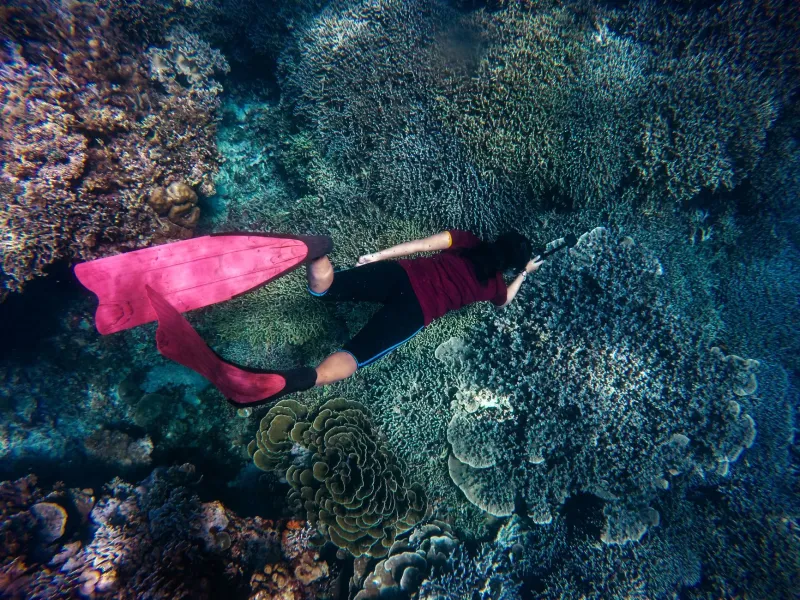
Guests can tour the underwater nursery on a snorkel trip Maria organizes twice a week. She keeps a laminated photo on the kitchen table showing the same reef patch in 1987 and today. It's a gut punch — but it's also the reason people come back.
3. The Tran Family Cottage — Cudjoe Key, Florida
Hai and Nguyen Tran immigrated from Vietnam in the 1990s and built a life on the water. Their cottage rental started as a side income, but after connecting with local marine biologists, it became something more intentional. They now partner with the Florida Fish and Wildlife Conservation Commission, directing a flat $50 per booking toward coral outplanting projects in the Lower Keys.
What makes this one stand out is the documentation. Guests receive a follow-up email six months after their stay with photos of the coral fragments that were planted during their visit. Hai calls it "proof that you were here for something."
4. Ohana Surf House — Haleiwa, Hawaii (North Shore, Oahu)
This one's a little louder than the others — the North Shore has that energy — but the conservation commitment is just as serious. The Kahananui family runs a four-bedroom surf house where a portion of every weekly rental funds the Hawaii Institute of Marine Biology's coral resilience research at Kaneohe Bay.
The bay's reef system is one of the most studied in the world, partly because it's shown surprising recovery capacity when given the right conditions. The Kahananuis will tell you about it over dinner if you ask. They've been following the research for years.
5. Reef Ridge Retreat — St. John, US Virgin Islands
After Hurricane Maria devastated the Virgin Islands in 2017, the Hendersons — a retired marine biologist and her daughter — rebuilt their hilltop guesthouse with a new purpose. Ten percent of bookings now fund the NOAA Coral Reef Conservation Program's work in the Virgin Islands, which focuses heavily on post-storm reef recovery.
The views from Reef Ridge are extraordinary, but what guests tend to talk about most is the evening conversation with Dr. Patricia Henderson, who can explain coral polyp biology in a way that makes you feel like you've been missing something your whole life.
6. The Kamaka Farmstay — Maui, Hawaii
This is technically a farm — macadamia nuts, tropical fruit, chickens — but the Kamaka family's land borders a coastal reserve where native coral species are struggling to reestablish after decades of agricultural runoff. They've partnered with the Maui Ocean Center's conservation arm, and a portion of every stay funds water quality monitoring that directly affects reef health in the adjacent bay.
It's a less obvious connection than an underwater nursery tour, but it's a real one. Healthy reefs need clean water. Clean water needs land stewards who give a damn. The Kamakas give several damns.
7. Seaview Cottage — Christiansted, St. Croix, US Virgin Islands
Run by lifelong St. Croix resident Darnell Joseph and his family, Seaview Cottage donates 25% of net booking revenue to the St. Croix Environmental Association's reef monitoring and restoration programs — one of the highest direct-contribution rates of any homestay we've come across.
Darnell is blunt about why: "The reef is why people come here. If it dies, everything dies. It's not charity. It's economic sense."
He's not wrong. And his honesty is refreshing in a space where greenwashing is rampant and vague pledges are easy to make.
How to Know If a Homestay's Conservation Claims Are Real
Not every property that mentions "eco-friendly" or "reef-safe" is doing meaningful work. Here's what to look for when you're booking:
- Named partners. Legitimate properties name the specific organizations they fund. Vague language like "supports local conservation" is a yellow flag.
- Defined percentages or dollar amounts. You should be able to know exactly how much of your booking fee goes where.
- Verifiable programs. Google the partner organization. Does it exist? Does it have a track record?
- Guest access. Properties that invite you to see the work firsthand — a reef dive, a nursery tour, a conversation with a scientist — tend to be the real deal.
All seven homestays listed here meet these criteria. We've verified their partnerships directly.
Why Families Do This Better Than Resorts
There's a structural reason family-run homestays tend to be more genuinely tied to conservation work than large hotels: they live there. The reef outside the window isn't a marketing asset to a family that's been swimming in it for thirty years. It's personal. The stakes are different when you can see the damage from your kitchen.
That intimacy — between host, place, and guest — is what makes these stays feel different from anything a five-star resort can manufacture. You're not just booking a room. You're entering into a relationship with a place and the people who are fighting for it.
At The Coral Tree Homestay, that's the kind of travel we're here to help you find. The kind where your presence actually means something — to the family hosting you, to the reef outside, and honestly, probably to you too.
The ocean's been patient. It could use some help.