No Phones at the Table, No Shoes Past the Door, No Exceptions: The House Rules That Sound Weird Until They Don't

The listing looked perfect. Wraparound porch, hand-stitched quilts, a host named Delores who'd been welcoming travelers into her Asheville, North Carolina farmhouse for eleven years. Then came the house rules section.
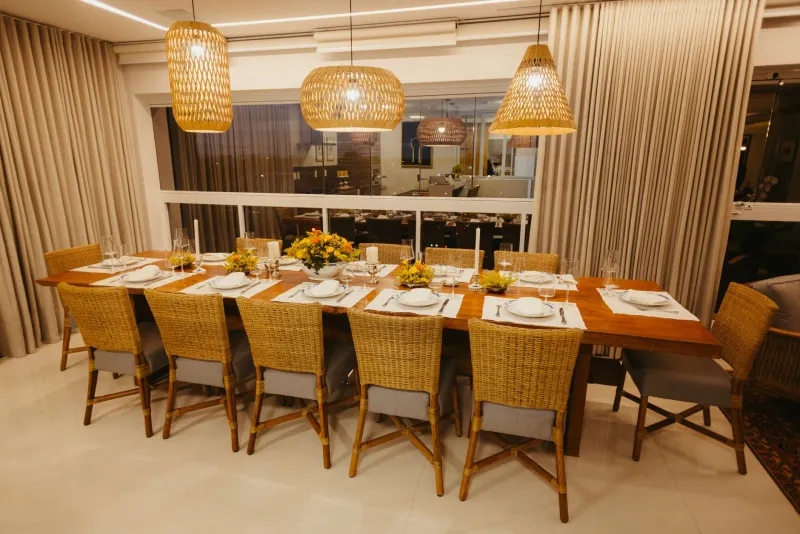
No phones in the kitchen or dining room. No exceptions. Not for photos of the food. Not for quick texts. Not for anything.
First-time guests reportedly screenshot the rule and send it to friends with a string of question marks. By the end of their stay, most of them are the ones defending it.
This is the thing about unconventional house rules in conscious homestays: they rarely make sense from the outside. But they almost always make sense from the inside — and the gap between those two perspectives is where some of the most interesting conversations in travel are happening right now.
Why Hosts Make Rules That Feel Uncomfortable
Delores didn't always have the phone rule. She introduced it after a couple spent an entire breakfast scrolling while she'd gotten up at 5:30 a.m. to make biscuits from scratch.
"It wasn't anger," she says. "It was more like — I realized I was cooking for an audience that wasn't there. The food was getting cold. The conversation never started. I thought, I'm offering something real here, and I need to protect it."
That word — protect — comes up a lot when you talk to conscious homestay hosts about their more unusual policies. They're not trying to be difficult. They're trying to preserve the specific thing that makes their home worth staying in.
Marco, who runs a surf homestay on the Oregon coast, has a rule that feels even stranger on paper: guests are asked to spend at least thirty minutes outside before 8 a.m. It's not enforced with a timer or anything. But it's in the listing, and he mentions it at check-in.
"People come here burnt out," he says. "And the first thing they want to do is recreate their regular morning — coffee, phone, couch. I get it. But that's not why they came. The rule is basically me saying: the thing you're here for is outside, not in here."
Guests who roll their eyes at the rule on day one tend to become the most enthusiastic advocates for it by day three.
The Rules That Reveal the Most About a Host's Values
Some rules are logistical — take your shoes off, don't run the dishwasher after 10 p.m., here's how the composting works. Those make immediate sense. But the rules that genuinely surprise guests are almost always the ones rooted in something deeper.
There's a homestay in the hill country outside San Antonio where guests are asked not to complain about the weather. It sounds absurd. But the host, a former climate researcher named Vivienne, has a whole philosophy behind it.
"We've lost the ability to just be in weather," she says. "It's too hot, it's too humid, it rained on our hike. I want this place to be somewhere people reconnect with the actual environment, not perform discomfort for each other. The rule sounds like a joke, but it opens up a real conversation almost every time."
That's the pattern. The strangest-sounding rules are often conversation starters disguised as policies.
At a coastal homestay in Maine, guests are asked to leave one hour each day completely unscheduled — no planned activities, no set meals, nothing. The host, a retired schoolteacher named Paul, calls it the "empty hour."
"People panic the first day," he says, laughing. "They don't know what to do with themselves. By the end of the week, they're asking if they can have two."
What Guests Actually Think — After the Eye-Roll Fades
Jessica, a project manager from Chicago who booked a homestay in rural Vermont last fall, was initially put off by a rule requiring guests to eat at least one meal with the host family each day.
"I'm an introvert," she says. "I booked a homestay, not a dinner party. I was a little annoyed."
But she went. And on the second night, the host's teenage daughter mentioned she was studying for a history exam, and Jessica — who'd minored in American history — ended up spending two hours helping her. She cried a little on the drive home, weeks later, thinking about it.
"That wouldn't have happened in a hotel," she says. "It wouldn't have happened if I'd eaten alone in my room every night. The rule forced me into the actual experience I didn't know I was looking for."
This is the unspoken social contract of conscious homestays. You're not renting a unit. You're entering someone's home, and that home has a culture. The rules aren't obstacles — they're the culture made visible.
The Rules That Protect the Place, Not Just the People
Not every unusual rule is about human connection. Some are about the physical environment — and those tend to be just as misunderstood.
A homestay in the Florida Keys asks guests not to use any personal care products while swimming in the backyard inlet. No sunscreen, no bug spray, nothing. It's a strict rule, and the host, a marine biologist named Tomás, will talk your ear off about why if you ask him.
"That inlet connects to a seagrass bed," he says. "Seagrass is a nursery habitat for juvenile fish, a carbon sink, a water filter. One bottle of the wrong sunscreen can disrupt a microbial community that took years to establish. I'm not being dramatic. I'm being accurate."
Guests who bristle at the rule — and some do — usually come around after the snorkeling trip Tomás leads on day two, where he points out every creature that depends on that seagrass bed.
The rule stops being an inconvenience. It becomes a reason to care.
What These Rules Are Really Asking Of You
There's a version of travel that treats accommodation like a storage unit for your body while you go consume experiences. Homestays — real ones, run by people with actual stakes in the outcome — push back against that.
The rules are how they push back.
Put your phone down. Go outside before you've had your coffee. Eat dinner with strangers. Don't complain about the humidity. Leave an hour empty.
None of these are punitive. They're invitations — just ones dressed up as policies because some guests need a little structure before they're willing to slow down.
The best conscious homestays aren't selling you a room. They're offering you a different way of moving through a place, even if just for a few days. The house rules are the first clue about what that looks like.
And yeah, sometimes they sound weird. That's usually a sign you should book it anyway.