Four Generations, One Porch, No Resort Required: The Quiet Rise of the Multigenerational Homestay Trip

The email came in late February. A woman named Renata was writing on behalf of her family — her parents in their late seventies, her two adult siblings and their spouses, four kids between the ages of six and fourteen, and her grandmother, who'd just turned ninety-one.
Thirteen people. One week. Did the host have space?
The host — Carol, who runs a sprawling century-old farmhouse on Maryland's Eastern Shore — had hosted big groups before. But something in Renata's email stood out. She wrote: We're doing this now because we don't know how many more chances we'll have.
Carol cleared her schedule and said yes.
Why Families Are Choosing This — Now
Multigenerational travel isn't new. But the specific form it's taking right now — extended families booking full homestays rather than adjacent hotel rooms or resort villa packages — reflects something that goes deeper than a travel trend.
American families are increasingly scattered. Adult kids relocate for work. Grandparents age faster than anyone wants to admit. Kids get into schedules so packed that a week in the same place with the whole family starts to feel like a logistical miracle. And then there's the collective hangover from the pandemic years, when distance became involuntary and people started recalibrating what they were actually waiting for.
"I hear the same thing from almost every family that books with me," says Carol. "They say some version of: we almost didn't do this, and then we realized we'd been almost not doing it for years."
The urgency is real, and it's reshaping how people book.
What a Homestay Offers That a Resort Doesn't
On paper, a large resort suite or a vacation rental compound might seem like the obvious choice for a big family trip. More infrastructure, more staff, more amenities. But families who've done both tend to describe the resort version the same way: everyone in the same zip code, but not really together.
The buffet splits people up. Kids disappear to the pool with one parent while grandparents rest in separate rooms. The sheer scale of a resort works against the intimacy that most multigenerational trips are actually trying to create.
A homestay — especially one run by a host who's present and invested — does something different. It creates a shared center of gravity.
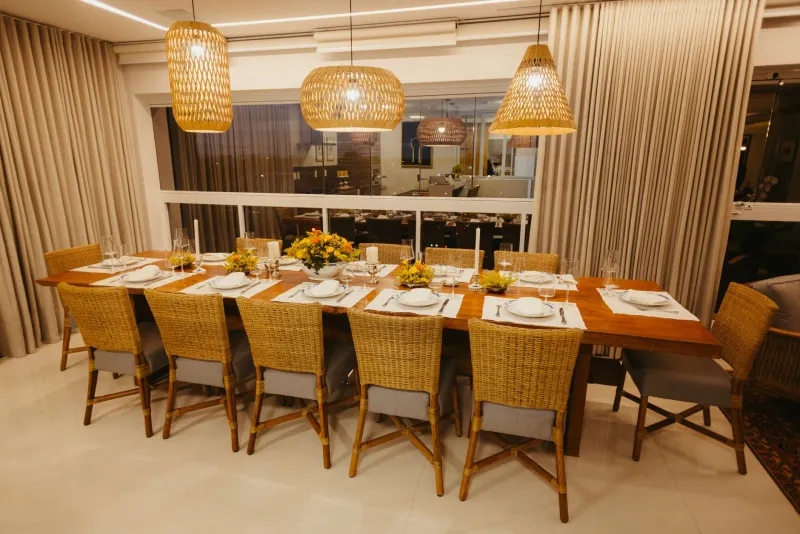
"There's a kitchen," says Renata, looking back on that Maryland trip. "A real one, that everyone can be in at the same time. My grandmother taught my daughter how she makes her sauce. My dad and my brother-in-law sat on the porch every morning for an hour before anyone else woke up. Those things happened because there was a home to happen in."
Hosts who specialize in larger groups often design their spaces with exactly this in mind — common areas that invite lingering, porches sized for conversation, kitchens that can handle a crowd. The architecture is intentional.
The Economics of Booking a Whole Homestay
Let's talk numbers, because this is where a lot of families get surprised — in a good way.
A quality homestay that sleeps twelve to fifteen people in a desirable location might run anywhere from $800 to $2,500 per night depending on the region and season. That sounds steep until you divide it by the number of adults contributing. A group of eight adults splitting a $1,200-per-night booking comes to $150 each — often less than a single hotel room in the same area, and with a full kitchen that eliminates a significant chunk of the food budget.
For multigenerational trips where older family members have specific needs — quieter spaces, earlier mealtimes, accessibility considerations — a homestay also offers something a hotel can't: the ability to customize the environment. Hosts can often accommodate dietary restrictions, arrange grocery orders in advance, or flag which rooms are most accessible. That kind of flexibility has real value when you're traveling with a ninety-one-year-old.
"I always ask families what the trip is actually for," says Marcus, who hosts large groups at his renovated farmstead in the Hudson Valley. "Is it a birthday? An anniversary? Is someone sick and this might be the last big trip? The answer changes everything about how I prepare."
What Hosts Witness That Guests Never Notice
Hosts who regularly accommodate multigenerational groups describe a particular arc to these stays. The first evening tends to be slightly awkward — people still in travel mode, kids overtired, the adults managing logistics. By day two, something loosens. By day three or four, hosts often notice things happening that they'd never see in a shorter or less intentional stay.
"I watched a grandfather teach his teenage granddaughter how to play chess on my back porch," says Marcus. "They were out there for three hours. I don't think they'd ever spent three uninterrupted hours together in their lives. The kid was completely absorbed."
Carol tells a version of this story too, and so do nearly every host who works with these groups. The common thread: something happens in the absence of a structured itinerary. Without the theme park or the tour bus or the scheduled activities, families default to each other.
"That's what I'm selling," Carol says. "Not the house. The conditions for that to happen."
The Trip Before Everything Changes
Renata's phrase — we don't know how many more chances we'll have — is one that a lot of families are sitting with right now.
The grandmother who came to Maryland that week, the ninety-one-year-old who taught her great-granddaughter to make sauce, passed away the following spring. Renata knows the math on that trip differently now.
"We got one more," she says. "We almost didn't book it. We almost said next year. I think about that a lot."
There's something the conscious travel movement gets right that the broader tourism industry mostly ignores: not all trips are created equal. Some are genuinely irreplaceable. A week in a house that holds four generations, where the cooking and the porches and the unscheduled hours create conditions that a resort itinerary never could — that's a different category of experience.
It doesn't require perfection. It requires showing up, in the same place, at the same time, before the window closes.
Book the house. Split the cost. Go now.