Three Generations Under One Roof: What Happens When Families Stop Touring and Start Staying

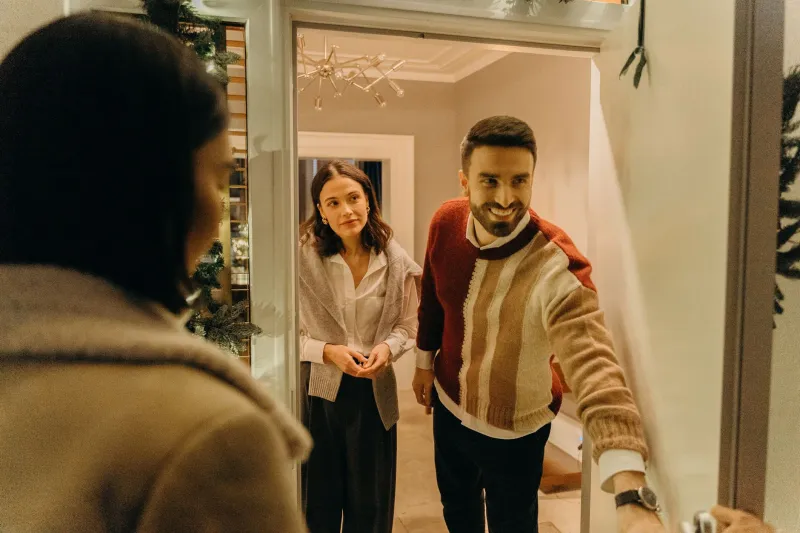
Photo by Photo by Sweet Life on Unsplash on Unsplash
The Pattersons had done the Disney trip. They'd done the cruise. They'd done the all-inclusive resort in Cancún where everyone dispersed to different pools by 10 a.m. and reconvened at the buffet with the particular exhaustion of people who've been having fun at each other rather than with each other.
"We kept taking these vacations where we were technically together," says Diane Patterson, 61, a retired teacher from Columbus, Ohio. "But my mom was always cold in the air conditioning, my daughter was always on her phone, and my son-in-law was always worried about keeping the grandkids from bothering other guests. We weren't actually together."
Last summer, they tried something different. They booked a three-bedroom homestay in the Blue Ridge Mountains — a working farm with a wraparound porch, a host family that shared dinners on request, and approximately zero scheduled activities. Four days. Four generations. No itinerary.
"By the second night," Diane says, "my mother was teaching my granddaughter to make biscuits in a stranger's kitchen. I honestly cried a little."
The Problem with the Traditional Family Vacation
American family vacations have been quietly optimized for throughput. See the thing. Take the photo. Move to the next thing. The tourism industry has built an entire infrastructure around keeping families busy, because busy families don't notice that they're not actually connecting.
This works fine — or fine enough — when everyone in the family is in roughly the same life stage. But multi-generational travel, which has grown steadily in the US over the past decade, exposes the limits of the activity-based vacation model fast. An 8-year-old and an 80-year-old have almost no overlapping interests when it comes to scheduled excursions. The 45-year-old in the middle spends the whole trip managing the gap.
Homestays disrupt this pattern almost by accident. When you remove the conveyor belt of activities and replace it with a shared space — a kitchen, a garden, a porch with rocking chairs — the family has to figure out what to do with each other. And something unexpected often happens: they figure it out.
What Slowness Does to a Family
There's a specific kind of conversation that only happens when there's nowhere to be. The ones that start with someone staring out a window. The ones that begin with a question a grandchild has been carrying for months but never found the right moment for. The ones that happen at 11 p.m. when everyone should be asleep but the kitchen light is still on.
Therapists and family counselors have a name for this: parallel play for adults. The idea is that meaningful connection often happens not face-to-face but side-by-side — while cooking, while doing a puzzle, while sitting on a porch watching the same sky. The structured vacation eliminates most opportunities for this. The homestay creates them constantly.
Marco Reyes, 38, booked a week-long homestay in the Texas Hill Country with his parents and his two teenagers after his father's cancer diagnosis. "We needed to be together in a way that wasn't clinical or heavy," he says. "The homestay gave us something to do with our hands — cooking, walking the property, helping the host feed their goats. It took the pressure off the conversation."
His father, he says, talked more during that week than he had in years. "Something about not being in anyone's house — not ours, not theirs — made it neutral ground. Nobody was on their own turf."
The Host as Unexpected Catalyst
One element that surprises multi-generational families again and again is the role the host plays. Unlike a hotel employee, a homestay host is a person — with their own story, their own relationship to the place, their own willingness to engage.
For older generations especially, this can be unexpectedly moving. Many grandparents grew up in a world where staying with people was just how travel worked — where the exchange of hospitality was personal and reciprocal. The hotel model erased that. Homestays bring it back.
"My mother-in-law had the most animated conversation I've seen her have in years," says Priya Nair, 42, who booked a coastal Georgia homestay for a family of seven spanning three generations. "She and the host were both from immigrant families, and they just started trading stories. My kids were listening. It was this completely unplanned thing."
These host interactions also model something valuable for younger generations: the practice of being genuinely curious about someone else's life. It's a skill that's hard to teach and easy to demonstrate.
Not Always Easy — And That's Sort of the Point
It would be dishonest to suggest that multi-generational homestays are all biscuit-making and porch sunsets. Shared spaces create friction. Grandparents have different sleep schedules. Teenagers have different ideas about screen time. Someone always runs the dishwasher wrong.
But that friction — managed in a low-stakes environment, in a home that belongs to neither family faction — can itself be productive. Families who travel this way often report that the minor negotiations of shared space translate into better communication back home. You've already established that Grandma needs it quiet by 9 p.m. You've already figured out that the teenager will actually engage if you give her a job to do in the kitchen. You've learned things about each other that a resort schedule would have kept hidden.
"We came home with inside jokes," says Diane Patterson. "That sounds small but it's not. We hadn't had new inside jokes in years."
How to Make It Work
A few things experienced multi-generational homestay travelers have learned:
Pick the right space, not the most impressive one. A property with a great common area — a real kitchen, a porch, a garden — matters more than square footage or amenities. You want places that invite lingering.
Communicate with the host before you book. Let them know you're traveling with multiple generations. Good hosts will flag things that matter: whether the property has stairs that could challenge an older guest, whether there's a quiet corner for someone who needs to decompress, whether they're open to a shared meal.
Build in unstructured time deliberately. Resist the urge to fill every day. The best moments in these trips tend to be the ones nobody planned.
Let the youngest and oldest set the pace. The middle generation usually has the most energy and the most agenda. Letting it go — even partially — tends to be where the magic lives.
What Gets Passed Down
There's something about the homestay format that feels, for many families, like a return to something they didn't know they'd lost. A way of being together that doesn't require performance or production. A pace slow enough for stories to surface.
Diane Patterson's mother is 84. She doesn't travel easily anymore. But she's already asked about going back to the mountains next summer.
"She said it felt like visiting family," Diane says. "And I thought — yeah. That's exactly what it was."