Two Hundred Miles and a World Away: Why the Best Trip You'll Ever Take Might Never Leave Your Time Zone
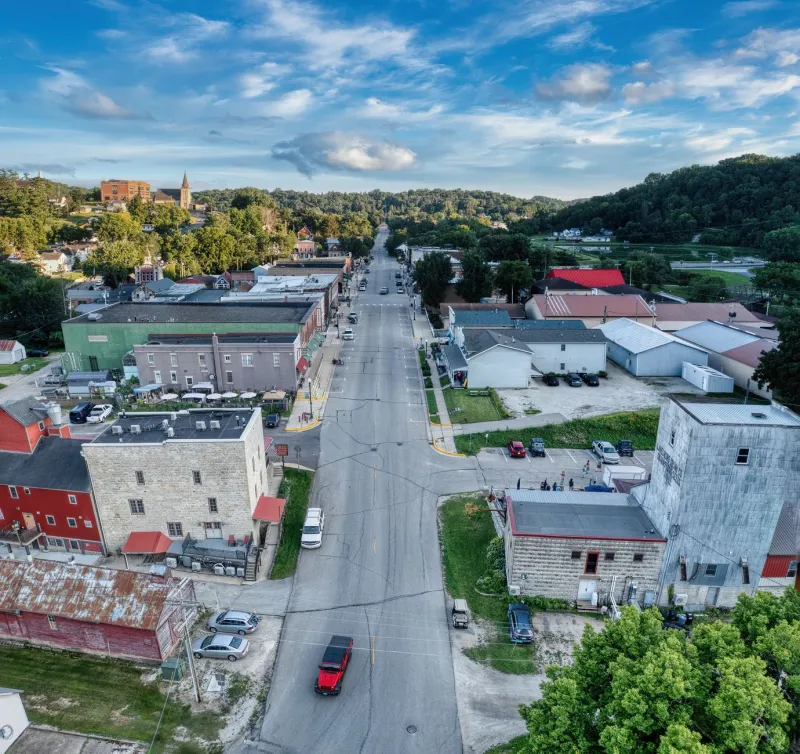
There's a particular kind of travel snobbery that's so normalized we barely notice it anymore. You mention you're taking a vacation and someone immediately asks: where are you going? The subtext is always the same — the farther, the better. The more exotic the destination, the more worthy the trip. A week in Oaxaca earns nods. A long weekend in eastern Kentucky gets a polite smile and a subject change.
But something is shifting, quietly and with real intention, among a subset of US travelers who've started questioning that hierarchy. They're booking homestays in coal country and river towns. They're sleeping in spare bedrooms in small Iowa cities and on screened porches in rural Mississippi. And they're coming back changed in ways that a flight to Lisbon never quite managed.
The Geography We Skip Over
Fly from New York to Los Angeles and you cross an astonishing variety of American landscape — and almost none of it registers. The Ozarks. The sandhills of Nebraska. The red clay hills of Alabama. We've built an entire travel culture around the edges of this country and the places beyond it, leaving the interior largely unexplored by the people who technically live closest to it.
The numbers reflect this. Rural communities across Appalachia, the Deep South, and the agricultural Midwest receive a fraction of the tourism investment that coastal cities and national park gateway towns capture. That gap isn't just an economic abstraction — it's felt in the form of empty storefronts, underfunded schools, and the persistent sense that nobody outside is paying attention.
When travelers do arrive — not as disaster tourists or journalists with a narrative already written, but as actual guests staying in actual homes — it changes the texture of that relationship in ways that matter.
What Hosts Are Saying
Marietta runs a three-bedroom homestay in a small town in southwestern Virginia, about forty minutes from the nearest interstate. She started hosting five years ago, mostly on a whim, after her kids left for college and the house felt too large for one person.
"The first few years, I'd get maybe a guest a month," she says. "Mostly people passing through on their way somewhere else. Now I have folks who come specifically here. They want to see the mountains. They want to eat at the diner on Main Street. They want to know who we are."
That shift — from throughway to destination — is exactly what local homestay hosting can catalyze. When a traveler books a room in Marietta's house, they're not just paying for a bed. They're buying groceries at the local store. They're eating at the family-owned restaurant. They're talking to people whose lives look nothing like their own, and that conversation goes both ways.
"I've learned as much from my guests as they've learned from me," Marietta says. "Probably more."
The Discovery Problem
Part of what makes domestic regional travel so underrated is that we assume familiarity where none actually exists. Most Americans have a vague mental map of their own country that is, if we're honest, wildly incomplete. We know the coasts. We know the landmarks. We know the theme parks.
But the actual lived texture of a small farming community in southern Illinois? The specific dialect and food culture of the Mississippi Delta? The particular way a mill town in western North Carolina has reinvented itself after losing its anchor industry? These are not things you learn from a travel algorithm. You learn them by staying somewhere long enough to have breakfast twice.
That's the quiet gift of the homestay model. You don't check in and check out. You arrive, you settle, and you pay attention. A host who's lived in a place for forty years can show you more of it in three days than a guidebook could in three hundred pages.
The Money That Stays
Conscious travelers already understand, in theory, that spending locally matters. But it's worth being specific about what that looks like in practice when you book a homestay in an economically overlooked region.
Your nightly rate goes directly to a family. Your groceries go to a local market. Your dinner goes to a restaurant whose owner is probably sitting two tables over. The money doesn't route through a corporate booking platform's headquarters or a hotel chain's investor returns. It circulates in the place where you're sleeping.
This is not a small thing. Tourism dollars are one of the few reliable mechanisms for moving economic energy into communities that traditional investment ignores. And homestay travel, specifically, is one of the most direct versions of that transfer.
The Traveler Who Comes Back Different
Ask anyone who's done this — who's taken a deliberate trip to a part of their own country they'd never thought to visit — and they'll describe a particular kind of disorientation that isn't unpleasant. The realization that your mental model of America was incomplete. That the people you were vaguely aware of, in the abstract, are specific and interesting and funny and complicated in ways that abstraction never captured.
This is what travel is supposed to do. Not confirm what you already believe, but productively unsettle it.
You don't need a ten-hour flight for that. Sometimes you just need to drive two hundred miles in the right direction, knock on the right door, and say yes when your host asks if you want coffee before you've even put your bag down.
Where to Start
If you're new to regional domestic travel, the instinct is to look for the obvious destinations — the mountain towns that already have boutique hotels and wine bars. Resist that. The more interesting trip is the one that requires you to look a little harder.
Search for homestays in areas that don't typically appear on travel roundup lists. Look for hosts with long profiles and specific language about their community. Ask questions before you book. A host who can tell you exactly where to get the best biscuits in a thirty-mile radius is a host who's going to show you something real.
The coral tree, in tropical ecosystems, provides shelter and structure for entire communities of creatures that couldn't survive without it. A good homestay host does something similar — they hold the shape of a place and let you inhabit it, briefly, as something more than a tourist.
That's worth two hundred miles of driving. Probably more.