The Lost Art of Being a Guest: What Homestay Etiquette Is Actually Teaching Us About Ourselves
My grandmother never entered someone's kitchen without being invited. She wouldn't have dreamed of it. There was a whole grammar to being a guest in someone's home — where you sat, when you spoke, how long you stayed at the table after the meal was done — and she moved through it with the ease of someone who'd been practicing since childhood.
I did not inherit this fluency. And if I'm being honest with myself, neither did most people I know.
We've spent the last few decades building a hospitality industry specifically designed to remove the social complexity of staying in someone else's space. Hotels are engineered for anonymity. The minibar doesn't care when you open it. Room service doesn't require you to make conversation. You can exist in a hotel for a week and leave without having had a single authentic interaction with another human being.
That convenience has a cost we're only starting to name.
What We Traded Away
The skills involved in being a good guest are not trivial. They require you to read another person's rhythms and adapt to them. To notice when your host is tired without being told. To understand that the question "are you hungry?" sometimes means "I made too much food and I really want you to eat it" and sometimes means "I genuinely want to know so I don't have to cook." To distinguish between the two requires a kind of social attentiveness that hotels have made entirely unnecessary.
Jennifer, a travel writer based in Portland who's stayed in homestays across twelve states over the past eight years, puts it plainly: "The first time I stayed in a real homestay — not an Airbnb, but an actual family home where the family was there — I realized I had no idea what I was doing. I kept reaching for my phone. I didn't know when to offer to help with dishes. I felt like I'd shown up to a dinner party with no idea what the occasion was."
She laughs telling the story now. But she's also clear that the discomfort was instructive. "It forced me to pay attention in a way I hadn't in years."
The Rules That Aren't Really Rules
Every homestay has its own version of the house customs — the things that aren't written down anywhere but are nonetheless real. Maybe shoes come off at the door. Maybe the family eats together at six and it's understood you'll be there. Maybe the host prefers you ask before you invite anyone over, which seems obvious until you realize how rarely hotel guests think about this at all.
These customs can feel, at first, like constraints. Travelers accustomed to the freedom of anonymous lodging sometimes chafe at them. But something interesting happens when you sit with that discomfort instead of avoiding it.
"I stayed with a family in rural Tennessee for almost two weeks," says Marcus, a software developer from Chicago who'd started booking homestays after burning out on business travel. "The grandmother — she lived there too — she'd have coffee ready every morning at seven. Not because she was trying to be a hotel. Just because that was her morning. And I started getting up at seven. I started sitting with her. We barely spoke the same cultural language, honestly. But by the end I understood something about her life that I couldn't have gotten any other way."
The coffee wasn't a service. It was an invitation. Learning to recognize the difference is exactly the skill we've lost.
Presence as Practice
There's a concept in certain mindfulness traditions around the idea that constraints create attention — that having fewer choices forces you to be more present with the choices you have. Homestay culture operates on something like this principle, though nobody frames it that way.
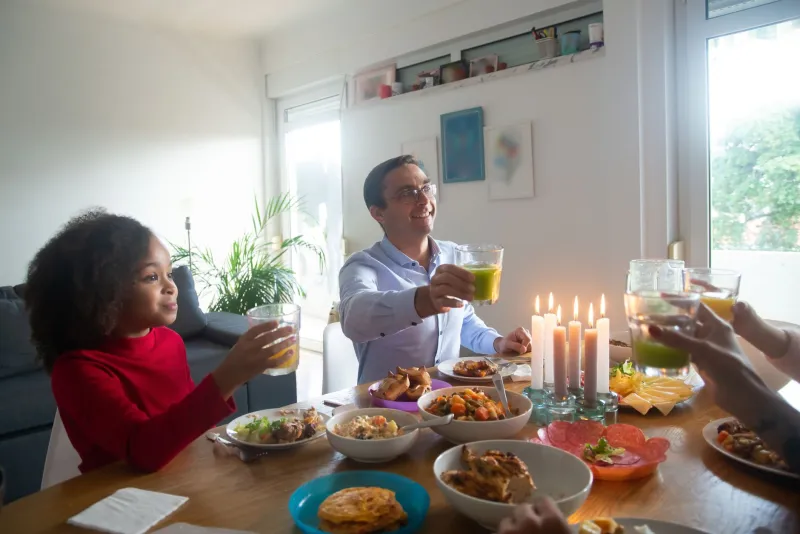
When you can't just order room service, you have to figure out dinner with your hosts. When you're sharing a bathroom, you have to coordinate. When there's one living room television and the host's family has a show they watch on Thursday nights, you either join them or you go to your room — and joining them turns out to be the better story every single time.
This is not romanticizing inconvenience. It's recognizing that the friction of shared space is also the mechanism of connection. You cannot be anonymous in a homestay. The host sees you at breakfast with yesterday's mascara and a bad mood. You see them stressed about something they haven't mentioned. You're both, briefly, human beings to each other rather than roles.
What Long-Term Guests Learn
The travelers who've stayed in homestays repeatedly — not once, but as a consistent practice — describe a cumulative effect that goes beyond any individual trip.
"I'm a better dinner guest in my own city now," Jennifer says. "I notice things I didn't before. I offer to help without being asked. I stay at the table longer. I ask questions that aren't just small talk." She pauses. "My friends have actually commented on it."
Marcus describes something similar. "I think I'm more patient in general. I learned how to be in a space that wasn't designed for me and just... adapt. That's a skill. It transfers."
This is the thing about homestay culture that doesn't show up in any marketing material: it's not just a way to travel. It's a way to practice being a person among other people. The skills it builds — attentiveness, adaptability, the willingness to be slightly uncomfortable in service of something more meaningful — don't stay at the door when you get home.
Asking Before You Open the Fridge
It sounds like a small thing. And in one sense it is. But the habit of asking before you take — of treating another person's space as genuinely theirs, not a resource to be consumed — is a posture that ripples outward.
Our grandparents knew this because they'd been guests in homes where the stakes were real. Where the host might not have had enough to share but shared anyway, and you understood the weight of that. Where the exchange of hospitality carried meaning that had nothing to do with a star rating.
We've built systems that make all of that invisible. Homestays make it visible again.
And if sitting through a meal you didn't expect, at a table you didn't choose, with people you didn't know last week, turns out to be the thing that teaches you how to be present — well. That's a better return than most vacations offer.