That 'Free' Breakfast Isn't Free: The Real Arithmetic of What Your Homestay Host Is Actually Giving You
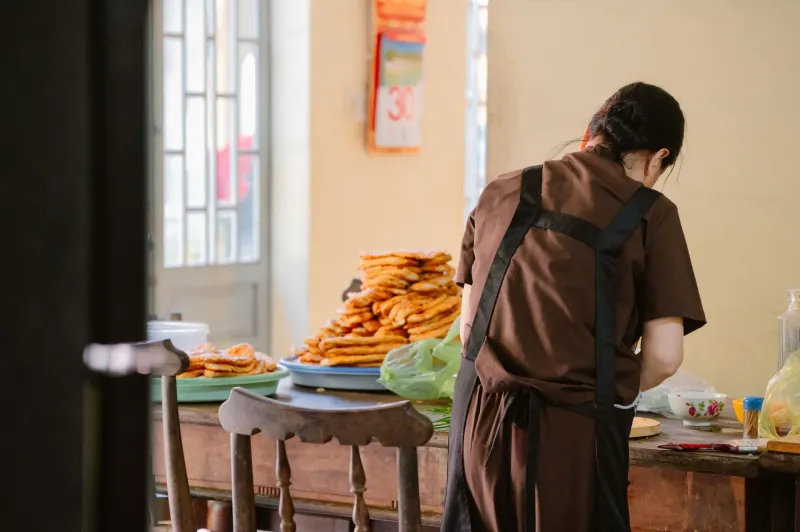
The listing said "breakfast included." What it didn't say — what listings almost never say — is that your host woke up at six to make it. That the eggs came from her neighbor's farm and cost more than the grocery store equivalent. That the jam was put up last August from fruit she grew herself, and there are only four jars left. That she's been hosting guests for three years and has never once raised her rate to account for any of this, because she's afraid a higher price will scare people off.
This is the quiet arithmetic of homestay hosting. And most guests never see it.
The Myth of the Included Amenity
The language of hospitality has trained us to think of "included" as meaning "free." Free breakfast. Free parking. Free Wi-Fi. The word does a specific kind of work — it signals value while obscuring cost. In a hotel context, this framing is mostly harmless. The costs are baked into a corporate pricing structure with accountants and margins and supply chain deals.
In a homestay, there are no accountants. There's a person — often a woman, often in a rural or semi-rural area, often operating without any formal business training — who is absorbing costs that she either can't calculate precisely or feels uncomfortable passing on.
Research on the short-term rental economy has repeatedly found that homestay hosts, particularly those who live on-site and provide meaningful hospitality (as opposed to absentee landlords renting empty units), systematically underprice their offerings. They undercount their time. They don't factor in the emotional labor of hosting. They absorb utility spikes during guest stays without adjusting rates. And they provide things — local knowledge, personalized recommendations, genuine human warmth — that have real value and no standard line item.
What the Real Number Looks Like
Let's be specific, because specificity is what this conversation usually lacks.
A host who offers breakfast for two guests might spend fifteen to twenty dollars on food per morning — more if she's sourcing locally or making things from scratch, which many hosts do because it's part of the experience they want to offer. That's before accounting for her time: the shopping, the prep, the serving, the cleanup. At even a modest hourly rate, a properly costed breakfast for two guests runs thirty to forty dollars minimum. Often more.
That number is almost never reflected in the nightly rate.
And breakfast is just the most visible piece. Hosts also absorb the cost of higher utility bills during guest stays — water, electricity, heat or air conditioning in rooms that wouldn't otherwise be conditioned. They absorb wear on linens, towels, mattresses, and common spaces. They absorb the time spent on pre-arrival communication, check-in orientation, local recommendations, and the ambient availability that guests expect but rarely clock as labor.
Diane, who runs a four-room homestay in the hill country of central Texas, started keeping a real expense log two years ago after a conversation with a bookkeeper friend made her realize she had no idea whether she was actually making money.
"The first month I tracked everything, I almost cried," she says. "I was charging sixty-five dollars a night and spending close to forty in direct costs per room, not counting my time. I thought I was running a business. I was running a charity."
She's since raised her rates — carefully, with a detailed explanation to returning guests about why — and has lost some bookings as a result. She's also, for the first time, actually profitable.
The Emotional Labor Nobody Prices
Money is the easier part of this conversation. Harder to quantify, but no less real, is the emotional labor that defines good homestay hosting.
A host who is genuinely present — who remembers that you mentioned a dietary restriction in your booking inquiry, who notices when you seem off and quietly leaves a cup of tea outside your door, who fields your 11pm question about whether the sound outside is something to worry about (it's not, it's just the neighbor's dog) — is doing work that has no parallel in the hotel industry. Hotels employ concierges and front desk staff to distribute this labor across a team. In a homestay, it sits entirely with one person, or one family.
This kind of attentiveness is also what makes homestay travel meaningful. It's the thing guests cite most often when they describe why they keep coming back. And it is, categorically, not free.
How Conscious Travelers Can Respond
None of this is an argument against homestay travel. It's an argument for doing it with your eyes open.
The most direct thing a traveler can do is pay a fair rate without flinching. When a homestay is priced higher than a comparable hotel room, that gap often reflects real costs that are finally being acknowledged. Choosing the cheaper option because it's cheaper, without asking what's being sacrificed to get there, is a form of participation in the problem.
Beyond pricing, there are other ways to show up as a conscious guest. Leave the kitchen cleaner than you found it. Strip your own bed on checkout day — it takes three minutes and saves your host meaningful time. Write a specific, detailed review that reflects the actual value you received, not just the star rating. Tip when tipping is an option, and tip generously when you know breakfast was homemade.
If you've received local recommendations that led to a genuinely good experience — a restaurant, a hike, a shop — tell the host. And if that shop or restaurant has a connection to your host's community, spend money there.
The Case for Transparent Pricing
Some hosts and booking platforms are beginning to experiment with more honest pricing structures — rates that explicitly break out food costs, utility contributions, and service fees in a way that makes the value visible rather than bundled into a single number. This approach has met with some resistance from guests accustomed to the "included" model, but early adopters report that guests who understand what they're paying for tend to be more appreciative, more considerate, and more likely to return.
Transparency, it turns out, builds trust. Who knew.
The coral tree doesn't offer shelter for free. It grows in specific conditions, requires specific care, and provides its ecosystem services because the conditions around it support that. Homestay hosting works the same way. When travelers recognize and support the real conditions that make extraordinary hospitality possible, the whole ecosystem gets healthier.
That breakfast was never free. It was an act of generosity that you were invited to receive. The least you can do is see it clearly.