How Coastal Towns Are Betting Their Futures on the Travelers Who Actually Show Up
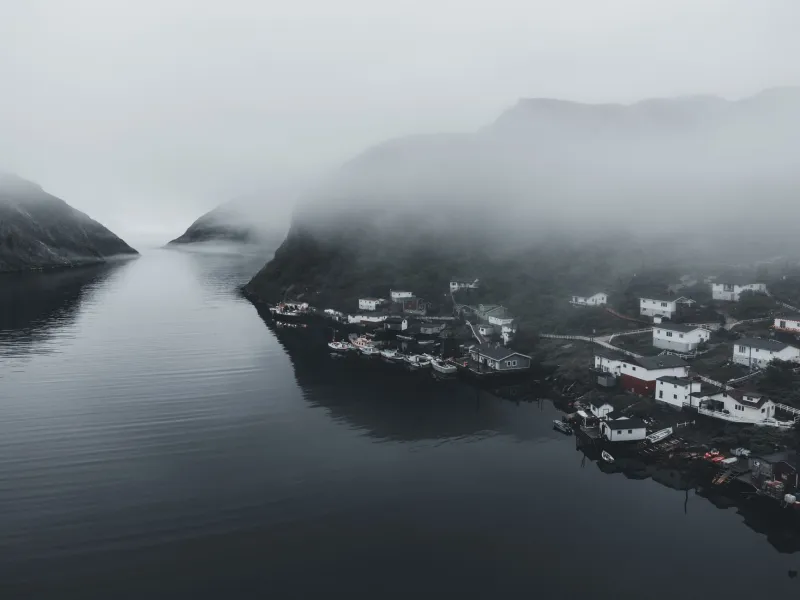
Drive through enough small coastal towns in America and you'll start to notice a pattern. On one end of the strip: a cluster of chain hotels, a mega-resort with a waterpark, maybe a T-shirt shop or two. On the other end: a neighborhood of modest houses, a bait shop that's been there since 1962, a community garden someone started after the last hurricane. A hand-painted sign for a bed and breakfast.
Those two ends of that strip represent two entirely different theories about what tourism is for — and increasingly, they represent two different futures for the communities caught between them.
The Resort Dependency Trap
For decades, the conventional wisdom in coastal economic development was simple: attract big hospitality investment, build the infrastructure to support it, and let the tourism dollars flow. Resorts bring jobs. Jobs bring stability. Done.
Except it hasn't worked out that way for a lot of places. The jobs resorts bring tend to be low-wage, seasonal, and controlled by ownership structures headquartered somewhere far from the coast. The economic activity they generate circulates mostly within the resort itself — guests eat at the resort restaurant, drink at the resort bar, rent gear from the resort outfitter. The money that reaches the actual community is smaller than the brochures suggest.
And then there's the climate math. Coastal communities are on the front lines of sea level rise, intensifying hurricanes, and coral reef degradation. The mega-resort model is not built for resilience — it's built for scale. When a category 4 storm takes out a 500-room beachfront hotel, the corporate parent files an insurance claim and decides whether it's worth rebuilding. The people who lived and worked there don't have that option.
A Different Bet
In places like the Florida Keys, coastal North Carolina, and parts of the Gulf Coast, a quieter strategy is taking shape. It doesn't have a single name or a coordinating organization. It's more like a convergence of instincts among people who've watched the resort model fail their communities and decided to try something different.
The core idea is straightforward: instead of depending on a handful of large tourism operators, build an economy around many small ones. Instead of funneling visitors into managed resort experiences, connect them directly with local families, local ecosystems, and local knowledge. Instead of treating tourism as extraction — come, spend, leave — build relationships that give visitors a reason to care about what happens to the place after they go.
Homestays are central to this strategy, and not just as a revenue source.
The Ecological Argument
Here's something that doesn't get enough attention in conversations about sustainable travel: the way people stay somewhere shapes how they relate to it.
A tourist who spends a week at an all-inclusive resort on the Florida Keys may technically be in the Keys, but they're experiencing a curated version of the place that's been designed to minimize friction and maximize comfort. The reef is a backdrop. The local ecosystem is scenery.
A traveler who stays with a local family — who wakes up to their host talking about the bleaching event that took out a coral formation they've been watching for twenty years, who goes snorkeling with someone who learned to dive in that water as a kid — experiences something categorically different. The reef is no longer scenery. It's a place with a story, and now it's partly their story too.
This shift in relationship has measurable downstream effects. Travelers who form personal connections to ecosystems through homestay experiences are more likely to donate to conservation organizations, advocate for protective policies, and return as repeat visitors who continue to support local economies. They're also, research suggests, more likely to talk about what they saw in ways that move other people.
In a world where coastal ecosystems desperately need more people who care about them, that's not a small thing.
Community-Scale Resilience in Practice
Consider what a distributed homestay economy actually looks like on the ground. Instead of one resort employing 200 people in mostly low-wage positions, you have 40 local families each hosting travelers a few months a year, supplementing fishing income or retirement savings or a teacher's salary with direct hospitality revenue. The money doesn't leave town. It goes to the grocery store, the hardware store, the local restaurant where the host takes their guests for the best grouper sandwich in the county.
When a storm comes — and it will — a distributed network of small hosts is more resilient than a single large property. Forty houses can absorb damage and recover individually. One mega-resort either survives or it doesn't, and the community has no control over what happens next.
There's also a knowledge-preservation dimension to this that's easy to overlook. Long-term local residents who open their homes to travelers are also, in a very real sense, opening their archives. The host who takes guests fishing knows where the fish were thirty years ago and where they are now. The family that's lived on the same barrier island for three generations carries ecological knowledge that no guidebook contains. When travelers access that knowledge through a homestay relationship, it gets transmitted — and it gets valued in a way it often isn't when locals are just the backdrop to someone else's vacation.
What This Asks of Travelers
None of this works without a different kind of traveler — someone willing to trade some control and predictability for something more real.
Conscious coastal travel means choosing the homestay over the beachfront resort even when the resort has a better pool. It means paying a fair rate that reflects what a local family's hospitality is actually worth, rather than hunting for the lowest price on a platform that takes a significant cut before the host sees anything. It means showing up with some curiosity about the place itself — its ecology, its history, its current pressures — rather than just its Instagram coordinates.
It also means being honest with yourself about the impact of your choices. Every booking is a small vote. A week at a locally-owned homestay on a vulnerable coastline puts money directly into a household that's invested in that place's future. A week at a resort chain puts money into a corporate structure that will leave if the math stops working.
The Places Worth Protecting
The coral reefs, the mangrove coastlines, the barrier islands, the estuaries — these places are under more pressure than most Americans realize. Climate change is accelerating damage that was already happening from development, pollution, and overfishing. The window for meaningful intervention is not infinite.
But here's what's also true: these places are still extraordinarily alive. The families who live on them still know their names. The reefs still have fish. The mornings are still quiet enough to hear the water.
The travelers who show up and stay in a real home, eat a real meal, and listen to a real story about what this place has been and what it's becoming — those travelers are part of the solution in a way that resort guests simply aren't.
That's not a guilt trip. It's an invitation. The coast is waiting, and some of the most interesting people on it are ready to open their doors.