You Came Back from Vacation More Lonely Than When You Left. Here's Why That Keeps Happening.
You took the trip. You got the photos. The hotel room was genuinely beautiful — high thread count, a rain shower, a view that looked exactly like the listing. You did everything right.
And then you came home and felt, somehow, worse than before you left.
If this sounds familiar, you're not broken and you didn't pick the wrong destination. You may have just run headfirst into a design problem that the hospitality industry has spent decades perfecting and almost no one is talking about honestly.
The Engineered Isolation of the Modern Hotel Stay
Luxury hotel design has one core goal: eliminate friction. Keyless entry so you don't have to talk to anyone at the front desk. In-room dining so you can eat without navigating a social situation. Soundproofed walls. A concierge you can text instead of call. Private pools, private beach chairs, private everything.
All of this is sold as comfort, and it is comfortable — in the way that a sensory deprivation float tank is comfortable. You're completely unbothered. You're also completely alone.
The loneliness epidemic in the United States is well-documented at this point. The U.S. Surgeon General issued an advisory on it in 2023, describing it as a public health crisis with mortality effects comparable to smoking. What's less discussed is how our leisure habits — including the way we travel — can actively reinforce isolation rather than interrupt it.
A frictionless hotel stay doesn't challenge your social patterns. It accommodates them. If you were lonely before you left, you'll be lonely in a better-appointed room.
Why Friction Is Actually the Thing You're Missing
Here's the uncomfortable part: the moments that make travel feel meaningful are almost always the ones that required a little awkwardness.
Asking your host which beach locals actually go to, and getting a twenty-minute story about their family instead of a quick answer. Eating breakfast across from a stranger and discovering you grew up in the same mid-sized Ohio city. Getting slightly lost because your host's directions were charmingly imprecise and stumbling onto something you never would have found on Google Maps.
None of that happens in a hotel. Hotels are specifically designed to prevent it.
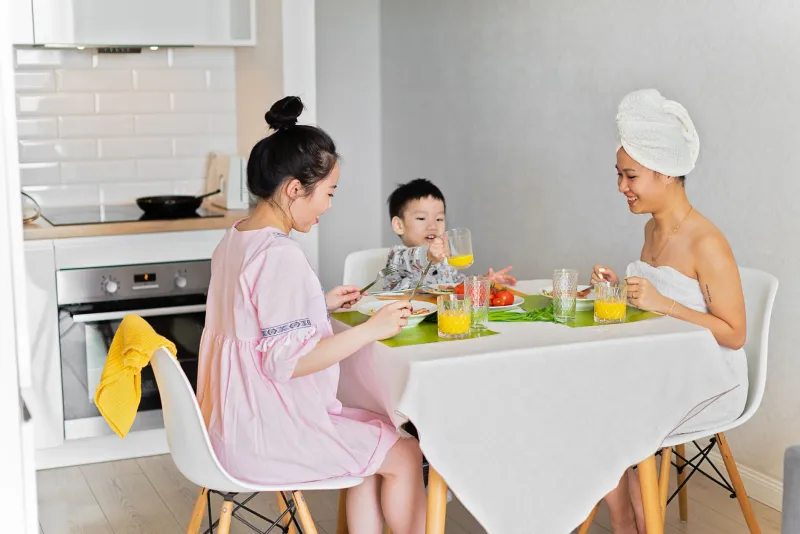
Homestays work differently — not because they're trying to manufacture connection, but because they can't fully prevent it. You're sleeping under someone's roof. You're sharing a kitchen, maybe a porch, definitely a neighborhood. The host knows the name of the dog next door and will tell you about it whether you asked or not. That's not a bug. That's the whole point.
The Psychology of Sleeping Under Someone Else's Roof
There's a specific kind of vulnerability that comes with staying in someone's home, and most people feel it as mild anxiety right up until it tips over into something unexpectedly warm.
Psychologists who study connection talk about the importance of what they call "low-stakes disclosure" — the small personal exchanges that happen when people share space without an explicit social agenda. The host who mentions offhand that they've lived on this street for thirty years. The note on the kitchen counter about which burner runs hot. The family photo on the wall that you ask about, and then suddenly you know something real about the person whose house you're staying in.
These micro-moments of human context don't happen at a Marriott. They happen at homestays constantly, almost accidentally, because the environment is set up for real life rather than hospitality performance.
For solo travelers especially, this matters enormously. Solo hotel travel can feel profoundly isolating — you're surrounded by other humans but sealed off from all of them. Solo homestay travel tends to feel like being a welcomed guest in a community, even if you're only there for a long weekend.
The Instagram Paradox
There's a version of travel that looks incredible online and feels hollow in real time. You know the aesthetic: the perfectly centered pool shot, the cocktail at golden hour, the boutique hotel room that photographs like a magazine spread. The trip produces great content and leaves you vaguely dissatisfied in ways you can't quite articulate.
Part of what's happening there is that optimizing your trip for documentation pulls you out of experience and into performance. But part of it is simpler: a photogenic trip isn't the same thing as a meaningful one, and the kind of human contact that makes travel feel real doesn't photograph particularly well.
Breakfast with your host isn't visually dramatic. A long conversation on a front porch about what it's like to raise kids in a small coastal town doesn't have a great caption. But those are the things people actually remember five years later. The resort pool fades. The conversation doesn't.
What to Actually Look For
If you're trying to find homestay experiences that deliver on the connection front, here are some honest signals:
Hosts who are present. Some homestay listings are essentially unhosted rentals with a guest bedroom. That's fine, but it's not the same thing. Look for listings where the host explicitly mentions sharing meals, being around to answer questions, or inviting guests to join them for local activities.
Shared common spaces. A living room you're welcome to use, a kitchen you can cook in, a porch with more than one chair — these are physical signals that connection is possible and invited.
Host bios that feel like actual people wrote them. You can tell the difference between a listing written to optimize search rankings and one written by a person who genuinely wants to tell you about their home. The latter is a better sign.
Small properties. The smaller the operation, the more likely your host is present, invested, and oriented toward relationship rather than throughput.
The Trip You Actually Needed
The loneliness that follows you on vacation isn't a mystery. It's a predictable outcome of choosing environments designed to keep you comfortable and isolated, then expecting those environments to somehow nourish you.
Homestays aren't a cure for loneliness. But they're one of the few travel formats that's structurally set up to interrupt it — not through programming or organized social activities, but through the simple, ancient hospitality of opening a door and saying: this is my home, come in, let me tell you about this place.
That's not a small thing. Especially right now.