When Your Host Starts Feeling Like Family and You're Already Planning Your Exit
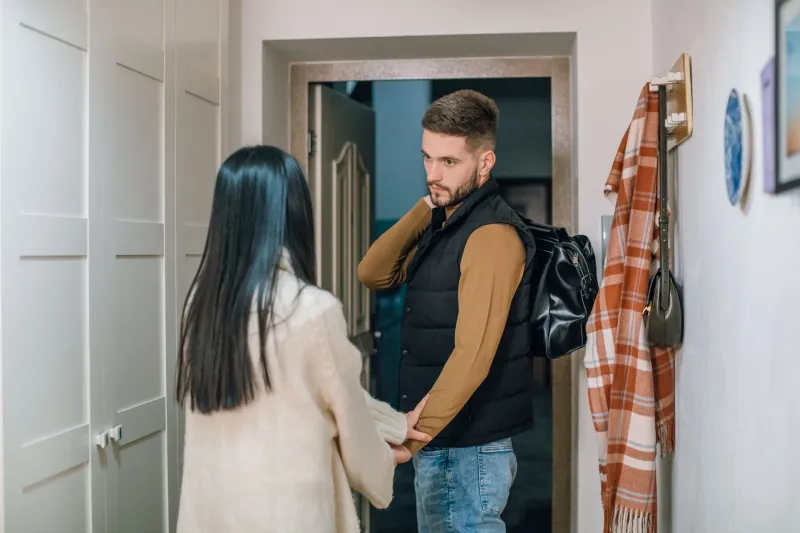
It usually happens somewhere around day three.
You've stopped being a guest in the formal sense. You know where the extra towels are without asking. You've been introduced to the neighbor by name. Your host has started saving you the chair closest to the window because they noticed, without you saying anything, that you like the morning light. And somewhere in the warmth of that — in the soup that appeared when you mentioned you were tired, in the conversation that ran two hours past when you meant to go to bed — something shifted.
You're not just a traveler in someone's house anymore. You're a temporary member of something. And you're leaving on Thursday.
This is the emotional territory that homestay travel doesn't warn you about. Not the logistical stuff — the shared bathrooms, the house rules, the breakfast timing. The deeper thing. The thing where genuine human connection forms fast and then you walk out the door with your rolling bag and your flight confirmation, and both of you are left figuring out what just happened.
The Asymmetry Nobody Talks About
Here's the uncomfortable truth at the center of the homestay experience: the relationship is not symmetrical, and it never really can be.
For your host, this is their home. Their life. Their kitchen, their neighborhood, their daily rhythms. You are a meaningful visitor passing through the permanent geography of their existence. They will remember you. They will wonder how you're doing. Some hosts — the ones who've been doing this for years — have a kind of running mental archive of the people who've sat at their table, and they genuinely want to know how things turned out.
For you, this is one stop on a trip. Or the trip itself. But even if this homestay was the whole point — even if you planned around it, chose it carefully, showed up with full presence and good intentions — you are going home to a life that doesn't include this house. The host becomes a memory, however warm. The connection becomes something you carry rather than something you live inside.
That gap — between what this place means to them and what it can realistically mean to you after you leave — is where the guilt lives.
Why the Guilt Happens (And Why It's Not the Whole Story)
Guests who feel guilty about leaving a homestay are almost always the right kind of travelers. The ones who didn't feel anything are the ones we should worry about. If you're sitting with some version of "I don't want to let them down" or "I feel bad that I won't stay in touch the way they're hoping," that's evidence of genuine connection — which is, after all, the whole point of this kind of travel.
But guilt, left unexamined, can make you behave in ways that aren't actually kind. It can make you over-promise. "I'll definitely be back next year!" when you have no idea if that's true. "Let's stay in touch!" when you already know your inbox is a place where good intentions go to quietly expire. These promises feel generous in the moment. They're not. They set up a future disappointment that's worse than the honest goodbye you could have given.
The more compassionate move — and the harder one — is to be truthful about what you can actually offer.
What Honest Follow-Through Actually Looks Like
Here's a reframe worth sitting with: staying in touch doesn't have to mean maintaining a friendship. It can mean something smaller and more reliable.
A postcard from home, mailed within a week of getting back. Not a text — a physical postcard, with your actual handwriting on it. This costs almost nothing and lands differently than any digital message. It says: you were real to me. I thought about you when I got home.
A review that's genuinely specific. Not five stars and "great stay!" but something that captures what was actually memorable — the meal, the conversation, the detail that made the place feel like a place. Your host can't always say what they want to say to future guests, but your words can say it for them. That's a meaningful gift.
A tagged photo on the platform where you booked, or a direct message six months later that just says "I've been thinking about that soup you made and wanted to say hi." No obligation attached. No expectation of a long exchange. Just: I remember you.
These are small things. They're also the things that actually get done, which makes them worth more than the large things that don't.
Setting Expectations Before They Get Set for You
Some of the most uncomfortable endings in homestay relationships could be softened with earlier honesty — not coldness, not emotional distance, just clarity.
If your host starts asking about your plans in a way that implies they're imagining a longer connection than you can offer, you don't have to play along. You can say, warmly, genuinely: "I'm terrible at staying in touch, honestly — I want to be upfront about that. But this week has meant a lot to me and I want to make sure you know that before I leave."
That's not a rejection. That's respect. It treats your host as someone who deserves honesty more than they deserve a performance of connection.
The Bittersweet Is the Point
There's a version of this conversation that tries to solve the problem — to find a system that makes the goodbye easier, the follow-through more reliable, the asymmetry less uncomfortable. But the more honest version acknowledges that the ache is structural. It's built into this kind of travel.
You can't stay everywhere forever. Your host knows this. The whole arrangement is built on the understanding that you will leave. And yet — and this is the thing worth holding onto — the connection was real. The soup was real. The two-hour conversation was real. The chair by the window was real.
Temporary doesn't mean false. Passing through doesn't mean passing over. Some of the most significant relationships in a life are the ones that didn't have time to become complicated — the ones that stayed in the register of warmth and curiosity and genuine care, unclouded by the friction that comes with permanence.
Your host is not naive about what you are to each other. They've done this before. They know the math of hospitality — that the people who leave are the ones who made it worth opening the door. They're not waiting for you to come back and stay forever. They're just glad you came.
Let yourself be glad too. And then go home and mail the postcard.